
JJ ENTERPRISE BLOG
Laminated or braided? Choosing the right copper flexible jumper
A copper flexible jumper does a simple job: it carries current between two points that cannot be joined with a rigid bar. The two points may move during operation, sit slightly out of line, or expand and contract with temperature. We make both laminated and braided jumpers to customer drawings, and the first question we ask is which construction suits the application.
Laminated jumpers
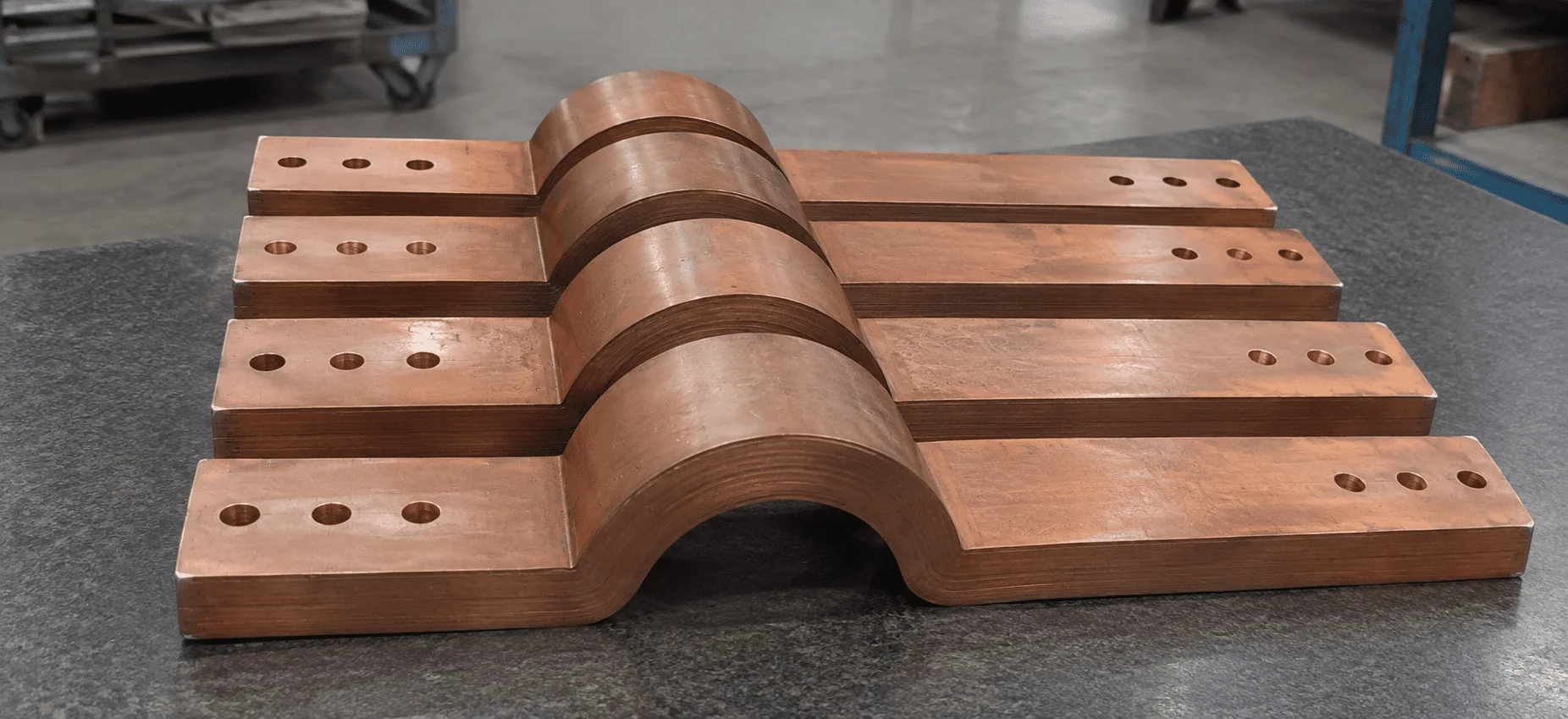
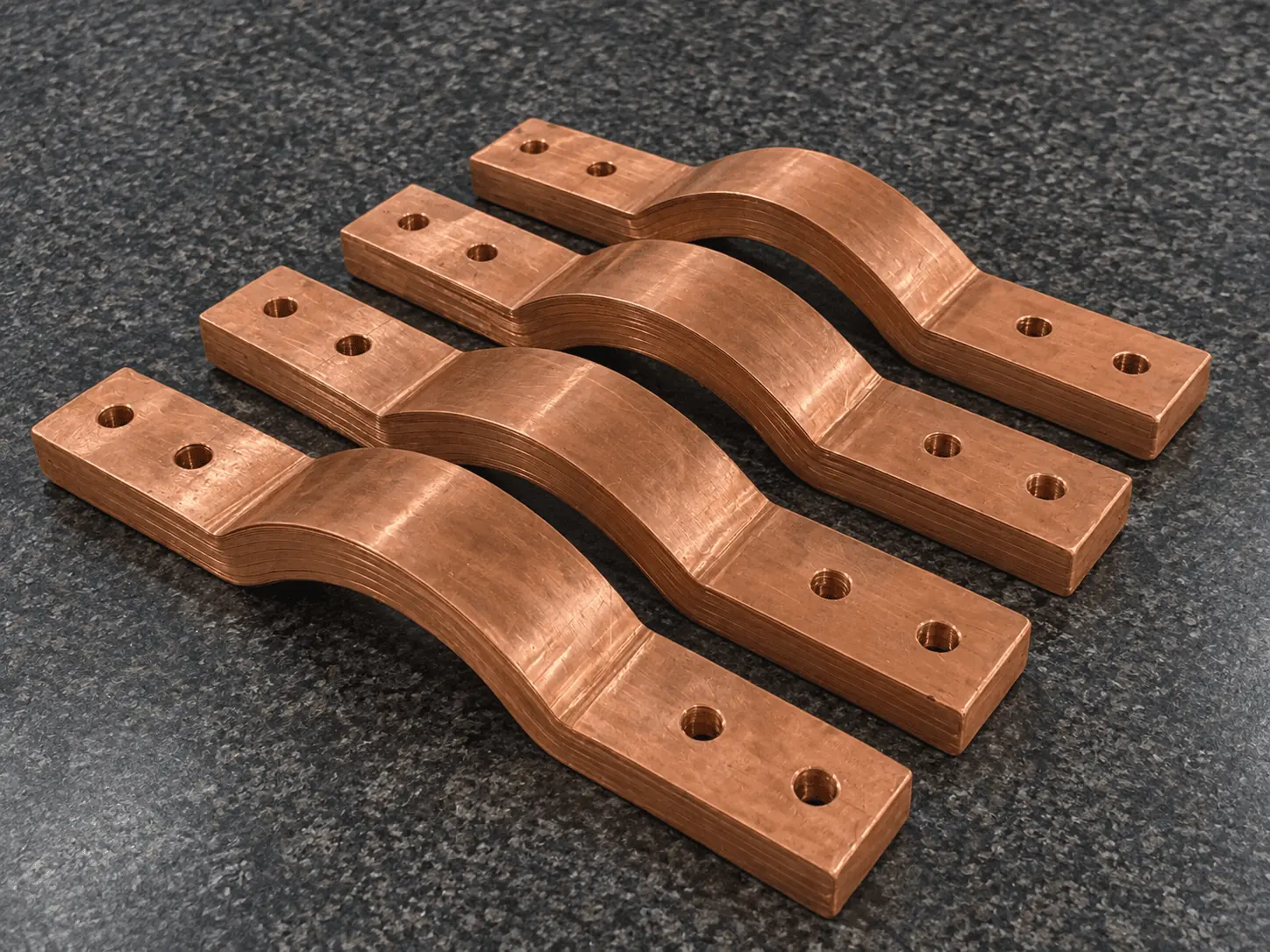
A laminated jumper is built from a stack of thin copper foils. The ends are pressed and brazed into solid pads, which are then punched or drilled to your hole pattern. Because the foils lie flat, a laminated jumper bends easily in one plane and keeps a neat, compact profile.
- Best where the movement is in one direction, for example a busbar that expands along its length.
- Solid brazed ends give a large, flat contact face for bolted connections.
- Available with an arched centre so the jumper can take up movement without stressing the ends.
Braided jumpers
A braided jumper uses woven copper strands finished with flat, punched lugs. The braid flexes in every direction, so it copes well with vibration and with connections that are not aligned.
- Best for equipment that vibrates, such as transformers and switchgear with moving contacts.
- Lugs can be supplied bare or tinned, with the hole size you specify.
- Longer runs are possible without the jumper becoming stiff.
What we need from you
To quote and manufacture a jumper we work from your drawing or a sample. The details that matter most are the current rating or copper cross-section, the distance between hole centres, the hole size, the end finish and the direction in which the jumper must bend. If you are not sure, send us the sample and the application and we will suggest a construction.
Every jumper is made in our works at Makarpura GIDC, Vadodara, using brazing, crimping, punching and drilling under one roof.